 Skip to content
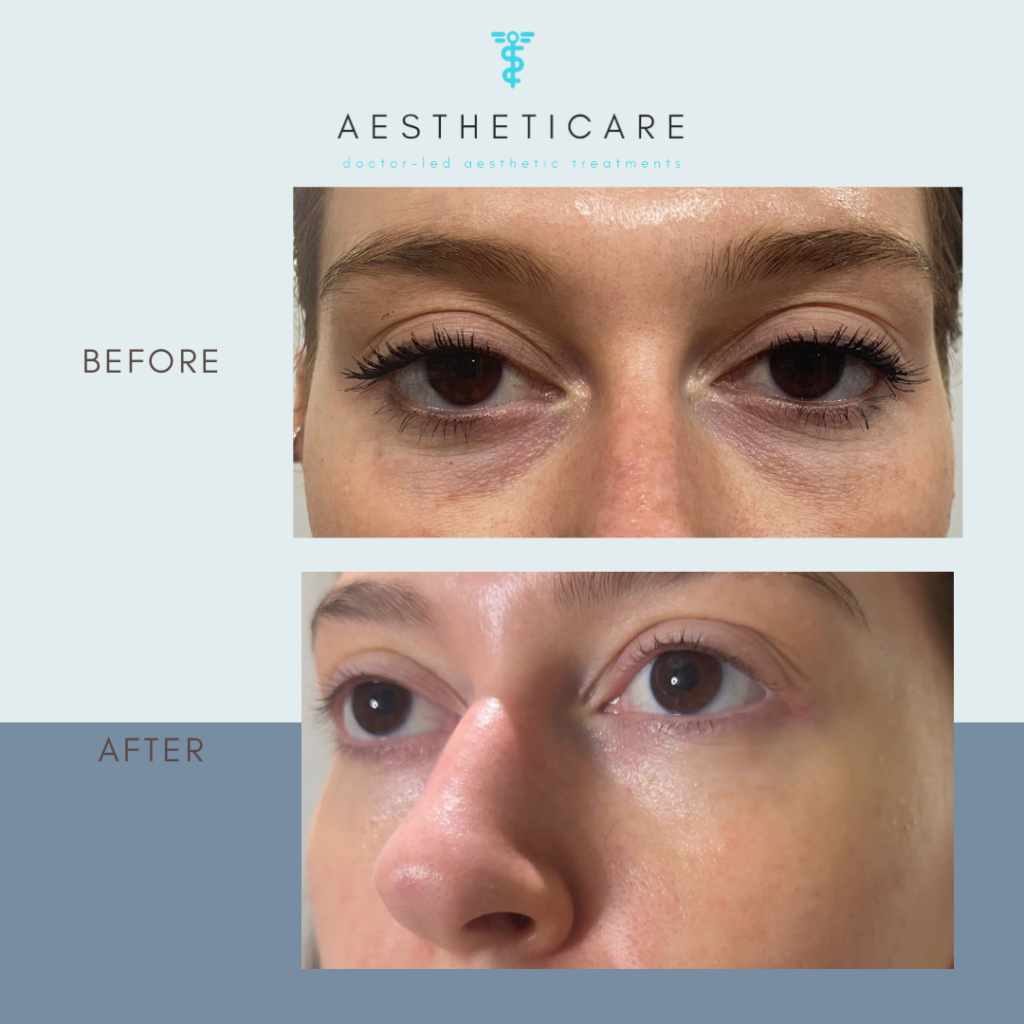
Doctor-led under-eye rejuvenation in Moorgate, Liverpool Street & the City of London
If you’ve ever looked in the mirror and thought…
- “Why do I always look tired?”
- “Why is the skin under my eyes so thin?”
- “Why do my dark circles never go away?”
- “Why does concealer make my under-eyes look worse?”
…you’re not alone.
The under-eye area is one of the first places to show signs of ageing, stress and collagen loss. Because the skin here is incredibly delicate, even small changes in hydration, skin thickness or elasticity can make you appear more tired than you feel.
At AesthetiCare Clinic in Moorgate, City of London, we specialise in regenerative under-eye treatments that work by improving the quality of your own skin rather than simply masking the problem.
Our philosophy is simple:
Restore. Don’t distort.
Rather than chasing dramatic changes, we focus on healthy skin, subtle improvements and natural-looking results that continue to develop over time.
What Causes Dark Under Eyes?
One of the biggest misconceptions is that all dark circles are the same.
In reality, several different issues can create the appearance of tired eyes.
Thin under-eye skin
As collagen naturally declines, the skin becomes thinner.
This allows the underlying blood vessels and muscle to become more visible, creating a bluish or purple appearance.
This is one of the most common reasons people search for:
- thin skin under eyes
- papery skin under eyes
- transparent skin under eyes
- crepey skin under eyes
Dehydrated under-eye skin
The eye area contains very few oil glands.
This means it loses moisture more easily than the rest of the face, leading to:
- fine lines
- rough texture
- makeup creasing
- dullness
- dehydration
Many patients tell us they constantly apply eye creams but still feel the skin looks tired.
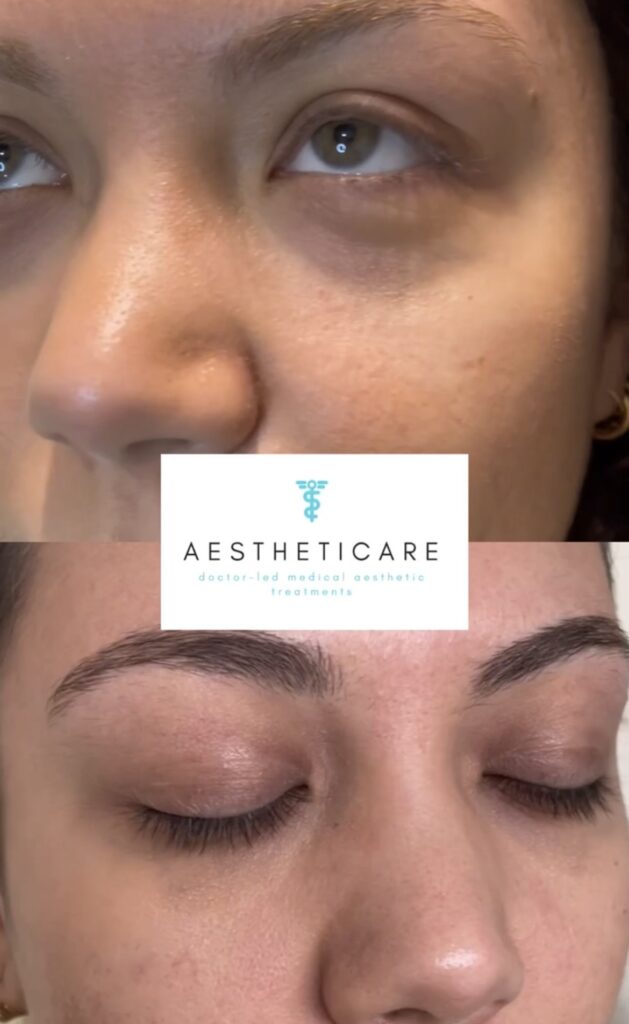
Loss of collagen and elastin
From our mid-20s onwards, collagen production gradually slows.
Over time this can cause:
- crepey under-eye skin
- fine lines
- reduced firmness
- skin laxity
- less support within the delicate tissues
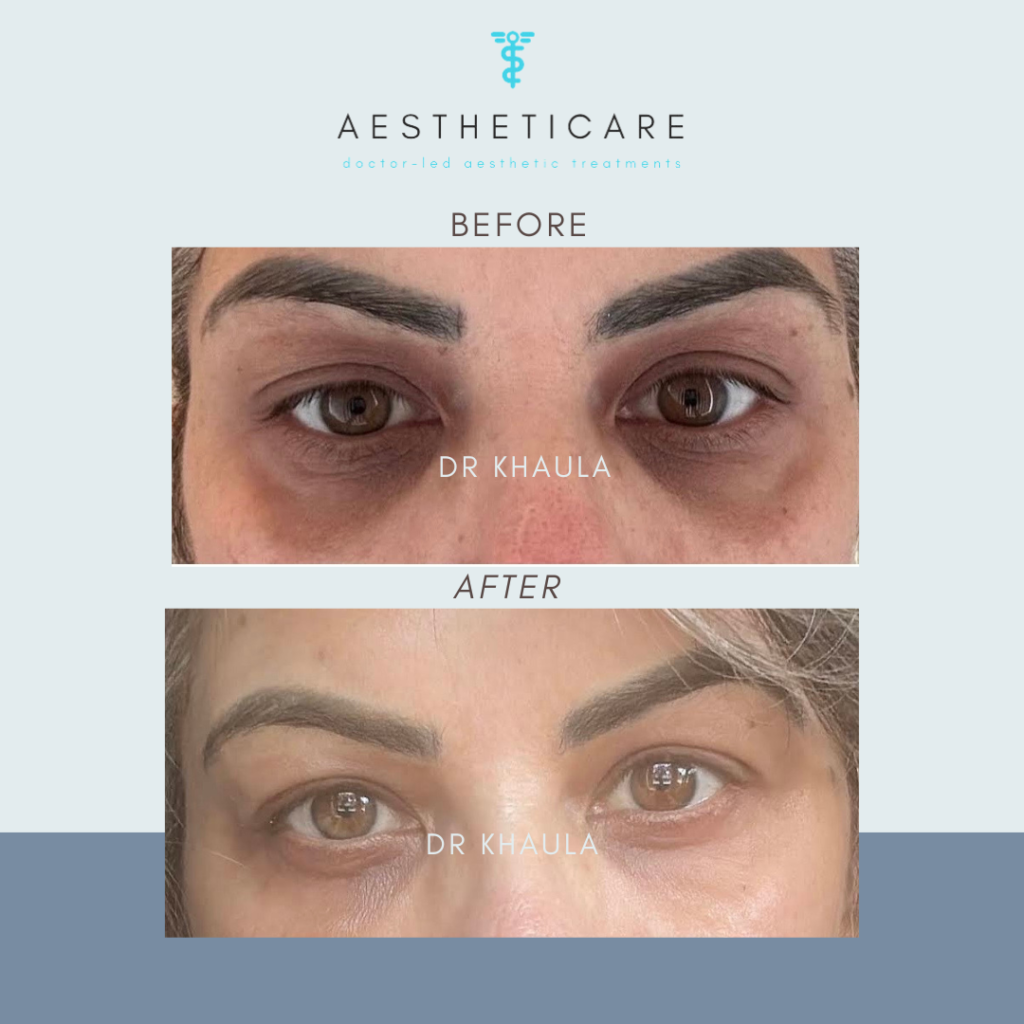
Pigmentation
Some dark circles are caused by increased pigmentation rather than blood vessels.
This may be genetic or related to:
- sun damage
- inflammation
- eczema
- rubbing the eyes
- post-inflammatory pigmentation
Different causes require different treatment plans.
Lifestyle factors
Poor sleep isn’t always the culprit.
Dark circles can also be influenced by:
- genetics
- allergies
- dehydration
- stress
- smoking
- UV exposure
- natural facial anatomy
This is why an assessment is so important before recommending treatment.
Why Patients Choose Dr Khaula for Under-Eye Regeneration
The under-eye area is one of the most technically demanding areas to assess and treat. It’s also one of the easiest areas to overtreat.
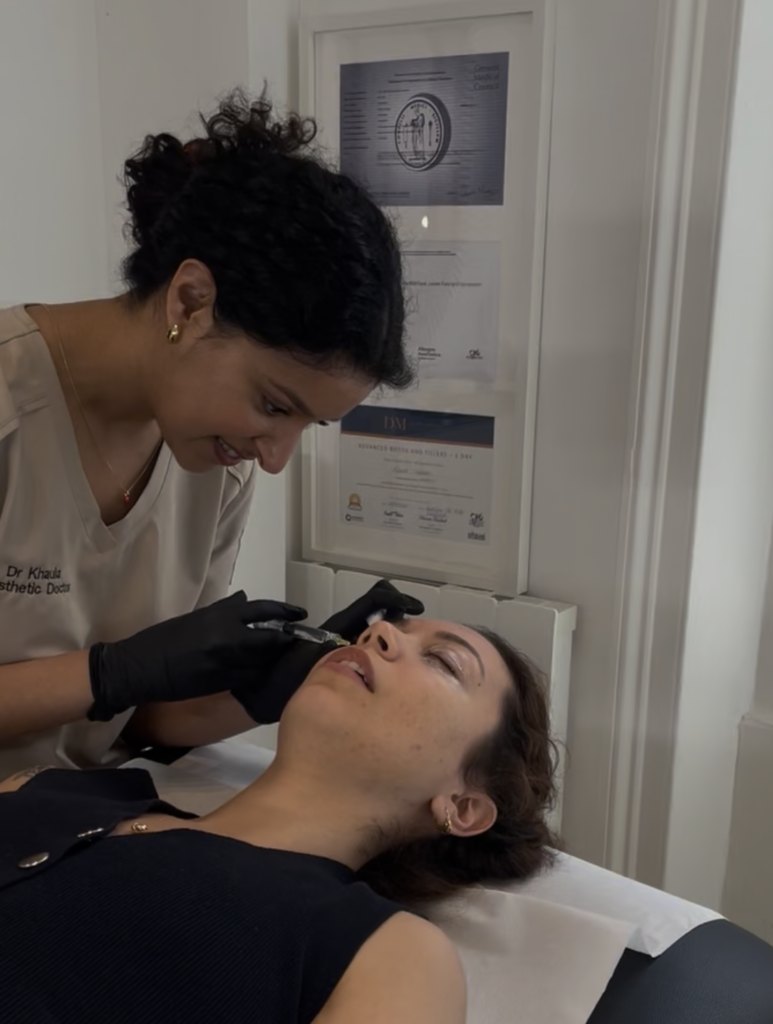
That’s why every under-eye consultation at AesthetiCare Clinic is carried out personally by Dr Khaula, a GMC-registered doctor with advanced training in facial aesthetics and a philosophy centred around safety, education and natural-looking results.
Dr Khaula believes that the best cosmetic treatments shouldn’t be obvious. They should leave people wondering why you look so well rested—not asking what you’ve had done.
Unlike many clinics that recommend the same treatment for every patient, each consultation starts by understanding why your under-eyes look the way they do. Dark circles, crepey skin, thin skin, dehydration and hollowness may look similar, but they often have completely different underlying causes.
That means treatment is never one-size-fits-all.
Some patients benefit from regenerative treatments such as polynucleotides. Others may be better suited to skincare, lifestyle changes or, in some cases, no injectable treatment at all.
Dr Khaula will always explain the reasoning behind every recommendation, answer your questions honestly and only recommend treatments she genuinely believes are in your best interests.
Her aim isn’t to sell treatments.
It’s to help you make an informed decision and achieve subtle, healthy-looking results that still look completely like you.
Because great aesthetics aren’t about changing your face—they’re about restoring confidence in it.
Why Dr Khaula Focuses on Regeneration Before Simply Adding Volume
Many people searching for dark circle treatment in London assume they need tear trough filler.
Sometimes they do.
Often, they don’t.
One of the most important parts of your consultation is understanding why your under-eyes look tired in the first place. While two people may have similar-looking dark circles, the underlying cause can be completely different.
For many patients, the issue isn’t a lack of volume at all. Instead, it’s thinning skin, collagen loss, dehydration or changes in skin quality that make the under-eye area appear darker, crepey or more hollow than it really is.
Rather than automatically replacing volume, Dr Khaula often takes a regenerative approach first. By improving the quality of the skin itself, regenerative treatments aim to encourage your body’s natural repair processes, supporting collagen production, hydration, elasticity and overall skin health.
The goal isn’t simply to disguise the problem—it’s to improve the tissue itself.
This philosophy reflects AesthetiCare Clinic’s approach to aesthetic medicine: treating the underlying concern wherever possible, rather than simply masking it.
What Are Polynucleotides?
Polynucleotides are one of the most exciting advances in regenerative aesthetics because they work very differently from traditional dermal fillers.
Rather than adding volume, they stimulate your skin’s own repair mechanisms, encouraging healthier, stronger and more resilient tissue over time.
Research suggests polynucleotides can support collagen production, fibroblast activity, hydration and tissue repair, leading to gradual improvements in overall skin quality.
For the delicate under-eye area, this may help improve concerns such as:
Thin or papery skin
Crepey skin
Fine lines
Dehydrated skin
Skin texture
Mild dark circles caused by visible blood vessels showing through thin skin
It’s important to understand that polynucleotides are not a replacement for tear trough filler where genuine volume loss is the main concern. They’re designed to improve skin quality rather than fill hollowness, which is why a thorough assessment is essential before deciding on the right treatment.
Is Under-Eye Regeneration Right for You?
Under-eye regeneration may be suitable if your main concerns include thin, fragile or crepey skin, fine lines, dehydration or a tired appearance that isn’t caused by significant volume loss.
It’s often an excellent choice for patients who want to improve the quality of their skin naturally, prefer subtle changes or simply don’t want dermal filler.
Every face is different, so the best treatment is always the one that’s tailored to your anatomy—not the latest trend.
Who Might Not Be Suitable?
One of the core values at AesthetiCare Clinic is ethical medicine.
That means sometimes the right decision is not to treat.
If your concerns are primarily caused by significant hollowing, prominent eye bags or another condition that regenerative treatments won’t meaningfully improve, Dr Khaula will explain this honestly and discuss alternative options.
Likewise, treatment may not be appropriate if you have an active infection, certain medical conditions affecting the area or expectations that aren’t realistically achievable.
Your long-term results will always be prioritised over making a booking. Building trust is far more important than recommending a treatment that isn’t right for you.
What Happens During Your Consultation?
Every treatment begins with a comprehensive doctor-led consultation with Dr Khaula.
Rather than looking only at the under-eye area, she assesses your facial anatomy as a whole, including your skin quality, pigmentation, facial balance, medical history, lifestyle and the concerns that matter most to you.
This allows her to identify the underlying cause of your dark circles or tired appearance before discussing the treatment options available.
Sometimes that means recommending regenerative treatment.
Sometimes it means improving your skincare routine.
Sometimes it means advising against treatment altogether.
Because the best treatment isn’t the most expensive or the most popular—it’s the one that’s genuinely right for you.
What Results Can You Expect?
Regenerative treatments aren’t designed to create an overnight transformation.
Unlike dermal fillers, improvements develop gradually as your skin responds by producing healthier, stronger tissue.
Most patients begin noticing subtle improvements over several weeks, with continued changes throughout their treatment course.
The aim has never been to make you look like someone else.
It’s to help you look fresher, healthier and more rested, while still looking completely like yourself.
The best aesthetic treatments don’t make people ask, “Have you had something done?”
They simply leave people saying,
“You look really well.”
Why Choose AesthetiCare Clinic?
Choosing an under-eye treatment isn’t just about choosing a product—it’s about choosing the person performing it.
Every consultation and treatment at AesthetiCare Clinic is carried out personally by Dr Khaula, a GMC-registered doctor with advanced training in facial aesthetics and a particular interest in regenerative medicine.
Her approach is built around five core principles:
Doctor-led expertise
Every assessment is tailored to your individual anatomy, concerns and medical history, with treatment recommendations based on clinical judgement rather than trends.
Education before treatment
You’ll leave your consultation understanding what’s causing your concerns, why a treatment has—or hasn’t—been recommended and what results you can realistically expect.
Safety before sales
If Dr Khaula doesn’t believe a treatment is likely to benefit you, she’ll tell you. Honest advice will always come before making a booking.
Regenerative, natural-looking results
The goal isn’t to change your face. It’s to improve the health and quality of your skin so you continue to look like yourself—just fresher, healthier and more confident.
Ongoing support
Your care doesn’t end when you leave the clinic. From detailed aftercare guidance to follow-up reviews, you’ll be supported throughout your treatment journey.
Frequently Asked Questions
What is the best treatment for dark circles?
There isn’t one treatment that’s right for everyone. Dark circles can be caused by thin skin, visible blood vessels, pigmentation, loss of volume or a combination of several factors. During your consultation, Dr Khaula will identify the underlying cause before recommending the treatment most likely to benefit you.
Can regenerative treatments help thin or crepey skin under the eyes?
For many patients, yes. By supporting your skin’s natural repair processes, regenerative treatments may improve hydration, collagen production and overall skin quality, helping the under-eye area appear healthier and more resilient over time.
Do regenerative treatments replace tear trough filler?
Not necessarily. They have different purposes. Regenerative treatments focus on improving skin quality, while tear trough filler restores volume in carefully selected patients. Some people benefit from one approach, while others may benefit from a combination. Your treatment plan will always be based on your individual anatomy.
How many treatments will I need?
Most patients achieve the best results with a course of treatments rather than a single appointment. During your consultation, Dr Khaula will create a personalised treatment plan based on your concerns, your skin and your goals.
Is there any downtime?
Most patients experience very little downtime. Mild swelling, redness or small bruises can occur around the treatment area but usually settle within a few days. You’ll receive comprehensive aftercare advice so you know exactly what to expect during your recovery.
Are the results permanent?
Regenerative treatments improve the quality of your skin, but they can’t stop the natural ageing process. As time goes on, your skin will continue to change, which is why many patients choose occasional maintenance treatments to help preserve their results. During your consultation, Dr Khaula will explain what you can realistically expect and whether maintenance is likely to be beneficial for you.
Where is AesthetiCare Clinic?
AesthetiCare Clinic is located in Moorgate, in the heart of the City of London, just a short walk from Liverpool Street, Bank, Barbican and Farringdon stations. We welcome patients from across London who are looking for safe, doctor-led regenerative aesthetics with a natural, personalised approach.
f you’re concerned about dark circles, thin under-eye skin, crepey skin, fine lines or dehydration, the first step is understanding what’s causing those changes.
During your consultation, Dr Khaula will carry out a detailed assessment, explain the treatment options available and provide honest, personalised advice tailored to your anatomy and goals.
Because the best results don’t come from treating every patient the same—they come from understanding the person sitting in front of you.