 Skip to content
Microneedling in Moorgate, City of London: A Doctor’s Guide to Smoother, Healthier Skin
If you’re searching for microneedling in London to improve acne scars, enlarged pores, pigmentation or overall skin quality, you’ve probably realised there’s a lot of conflicting information online.
At AesthetiCare Clinic, we believe patients deserve honest, evidence-based advice—not exaggerated promises.
As a doctor-led aesthetics clinic in Moorgate, close to Liverpool Street, Barbican and Farringdon, every microneedling treatment begins with a comprehensive consultation so we can understand your skin, your concerns and your goals before creating a personalised treatment plan.
What Is Microneedling?
Microneedling (also called collagen induction therapy) is a minimally invasive skin treatment that uses thousands of tiny sterile needles to create controlled micro-injuries within the skin.
These microscopic channels stimulate your body’s natural healing response, encouraging the production of:
- Collagen
- Elastin
- New healthy skin cells
Over the following weeks, your skin gradually becomes firmer, smoother and more even in tone and texture.
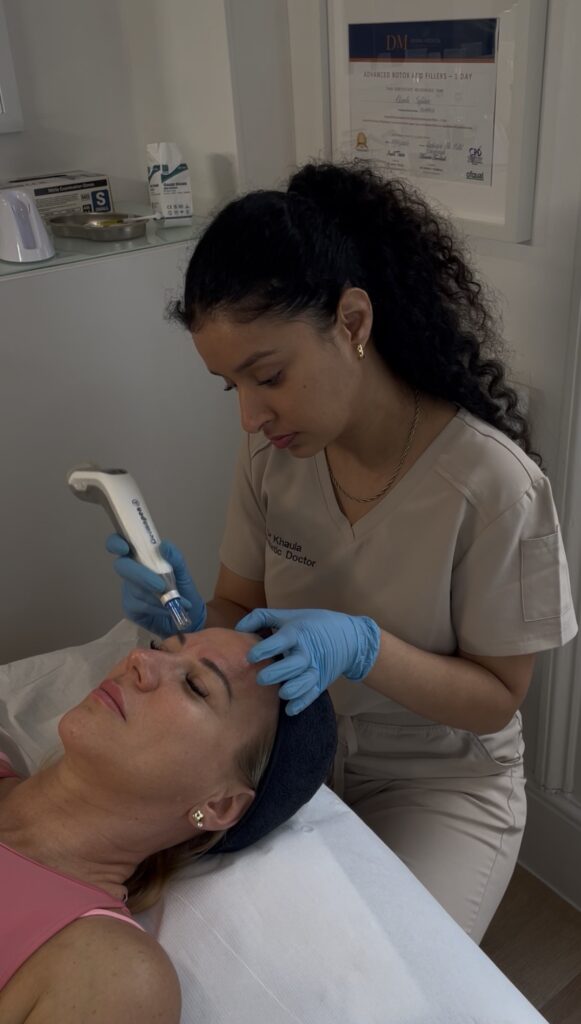
At AesthetiCare Clinic, we use the Dermapen 4, an advanced medical-grade microneedling device designed to create precise, consistent microchannels while minimising unnecessary trauma to surrounding tissue.
What Can Microneedling Help?
Microneedling is one of the most versatile regenerative skin treatments available because it improves the quality of the skin itself rather than simply masking concerns.
It may be recommended for:
Acne scars
One of the most common reasons patients seek microneedling.
By stimulating collagen production beneath the surface, microneedling can gradually soften the appearance of atrophic acne scars and improve overall skin texture.
Enlarged pores
Microneedling encourages collagen around the pore walls, helping the skin appear firmer and reducing the appearance of enlarged pores over time.
Uneven skin texture
If your skin feels rough, bumpy or lacks smoothness, collagen induction can improve overall texture and leave the skin looking healthier.


Fine lines and early signs of ageing
As collagen naturally declines with age, microneedling helps stimulate new collagen production which may improve fine lines, skin firmness and elasticity.
Hyperpigmentation
Microneedling may help improve certain types of pigmentation, including post-inflammatory hyperpigmentation (PIH) left behind after acne.
However, not all pigmentation is treated the same. During your consultation we’ll determine whether microneedling is appropriate or whether another treatment would achieve a better result.
Sun damage
Microneedling may improve the appearance of sun-damaged skin by encouraging healthier skin renewal and improving overall texture.
Dull skin
Many patients simply want healthier, brighter skin with more radiance.
By stimulating natural regeneration, microneedling can restore glow without changing your natural appearance.
How Does Microneedling Work?
The treatment works through your body’s own healing mechanisms.
The controlled micro-injuries trigger three key stages:
1. Inflammation
Growth factors are released and blood flow increases.
2. Proliferation
Fibroblast cells begin producing fresh collagen and elastin.
3. Remodelling
Over the following weeks and months, the skin gradually becomes stronger, smoother and healthier.
Because collagen production takes time, improvements continue developing well after your appointment.
Every Treatment Plan Is Different
One of the biggest misconceptions about microneedling is that every patient should receive exactly the same treatment.
We don’t believe in one-size-fits-all skincare.
Every treatment at AesthetiCare Clinic is personalised according to:
- your skin concerns
- your skin type
- your medical history
- your goals
- previous treatments
- recovery time
- lifestyle
The depth of treatment, treatment areas and professional mesotherapy serums are selected specifically for your individual concerns.
Depending on your skin, your treatment may focus on:
- hydration
- pigmentation
- collagen stimulation
- skin repair
- calming inflammation
- overall rejuvenation
Why Choose Doctor-Led Microneedling?
Microneedling appears simple—but deciding whether someone should have treatment, how aggressively they should be treated and what to combine it with requires clinical judgement.
As a GMC-registered doctor, Dr Khaula Safdar carries out every consultation personally.
Our philosophy is simple:
We never perform treatments simply because someone asks for them.
If microneedling isn’t the best option for your skin, we’ll tell you.
Sometimes another treatment—or even waiting—is the better decision.
Our priority is always achieving the safest and best long-term outcome for your skin.
Is Microneedling Right For Everyone?
Not always.
Microneedling may not be suitable if you have:
- active acne breakouts in the treatment area
- active skin infections
- cold sores
- certain inflammatory skin conditions
- open wounds
- uncontrolled diabetes
- impaired wound healing
- certain medications that increase infection risk
- pregnancy (depending on associated products used)
This is why every patient undergoes a medical consultation before treatment.
Your safety always comes first.
What Happens During Your Consultation?
Before booking treatment, we’ll assess:
- your medical history
- medications
- previous treatments
- skin concerns
- skin analysis
- treatment suitability
- realistic expectations
You’ll have plenty of opportunity to ask questions before deciding whether treatment is right for you.
There is never any pressure to proceed.
What Happens During Treatment?
A typical appointment lasts around one hour.
Your appointment includes:
- skin assessment
- cleansing
- topical numbing cream (where appropriate)
- Dermapen microneedling treatment
- personalised professional serum application
- post-treatment skincare
- detailed aftercare advice
Our team also provides ongoing support after your appointment if you have any questions during healing.
Downtime & Aftercare
Most patients experience:
- redness for 24–48 hours
- mild sensitivity
- slight swelling
- temporary tightness
Some people recover faster, while others may experience redness for a little longer depending on treatment intensity.
For the first few days we usually recommend:
- avoiding makeup for 24 hours
- avoiding swimming and saunas
- avoiding strenuous exercise for 24 hours
- wearing SPF daily
- avoiding active skincare ingredients until advised
- keeping the skin clean and hydrated
We’ll provide personalised aftercare instructions based on your treatment.
How Many Sessions Will I Need?
This depends entirely on your skin concerns.
As a general guide:
- Skin rejuvenation: 3 sessions
- Acne scars: 4–6 sessions
- Pigmentation: multiple sessions depending on severity
- Long-term maintenance: every few months
Collagen takes time to rebuild, which is why consistent treatments generally produce the best results.
Microneedling Prices
Our doctor-led microneedling treatment is:
£250 per session
For patients requiring a course of treatment, we also offer discounted treatment packages, which will be discussed during your consultation if appropriate.
Rather than recommending the same package to everyone, we’ll advise the number of sessions most likely to help you achieve your goals.
Why Patients Choose AesthetiCare Clinic
Patients choose AesthetiCare Clinic because they value:
- Doctor-led care
- Personalised treatment plans
- Evidence-based advice
- Honest recommendations
- Comprehensive consultations
- Ongoing aftercare support
- High-quality medical-grade devices
- Individualised treatment protocols
- A welcoming, supportive environment
We understand that great results don’t come from simply performing a treatment—they come from understanding the patient behind it.
Frequently Asked Questions
Does microneedling hurt?
Most patients describe the treatment as very tolerable. A topical numbing cream is used beforehand to maximise comfort.
How long does microneedling take?
Appointments typically last around one hour, including consultation, preparation, treatment and aftercare.
When will I see results?
Some patients notice brighter skin within a week, but collagen production continues over several weeks. Results usually become more noticeable after multiple treatments.
Can microneedling remove acne scars?
Microneedling can significantly improve the appearance of many acne scars, but complete removal is rarely realistic. During your consultation we’ll discuss the likely improvement for your specific scar type.
Can microneedling help pigmentation?
Yes—for certain types of pigmentation, particularly post-inflammatory hyperpigmentation. However, not all pigmentation responds equally, so an assessment is essential.
Is there any downtime?
Most patients experience redness similar to mild sunburn for 24–48 hours, with minimal disruption to daily activities.
Is microneedling safe for darker skin tones?
When performed appropriately, microneedling is generally suitable for a wide range of skin types. Treatment depth and technique are carefully tailored to minimise risks.
Where is AesthetiCare Clinic located?
Our doctor-led aesthetics clinic is conveniently located in Moorgate, within walking distance of Liverpool Street, Bank, Barbican and Farringdon, making us easily accessible from across the City of London and Central London.
Book Your Microneedling Consultation
If you’re considering microneedling for acne scars, pigmentation, enlarged pores or overall skin rejuvenation, the first step is a personalised consultation.
We’ll assess your skin, discuss your concerns honestly and create a treatment plan tailored specifically to you.
Because your skin deserves more than a one-size-fits-all approach.